 indiely
Launch · FIELD NOTES
How Steam Launch Visibility Works (and How to Make the Most of It)
What Steam actually does for a new release, which factors help visibility according to Valve, which do not, and how to prepare for launch week.
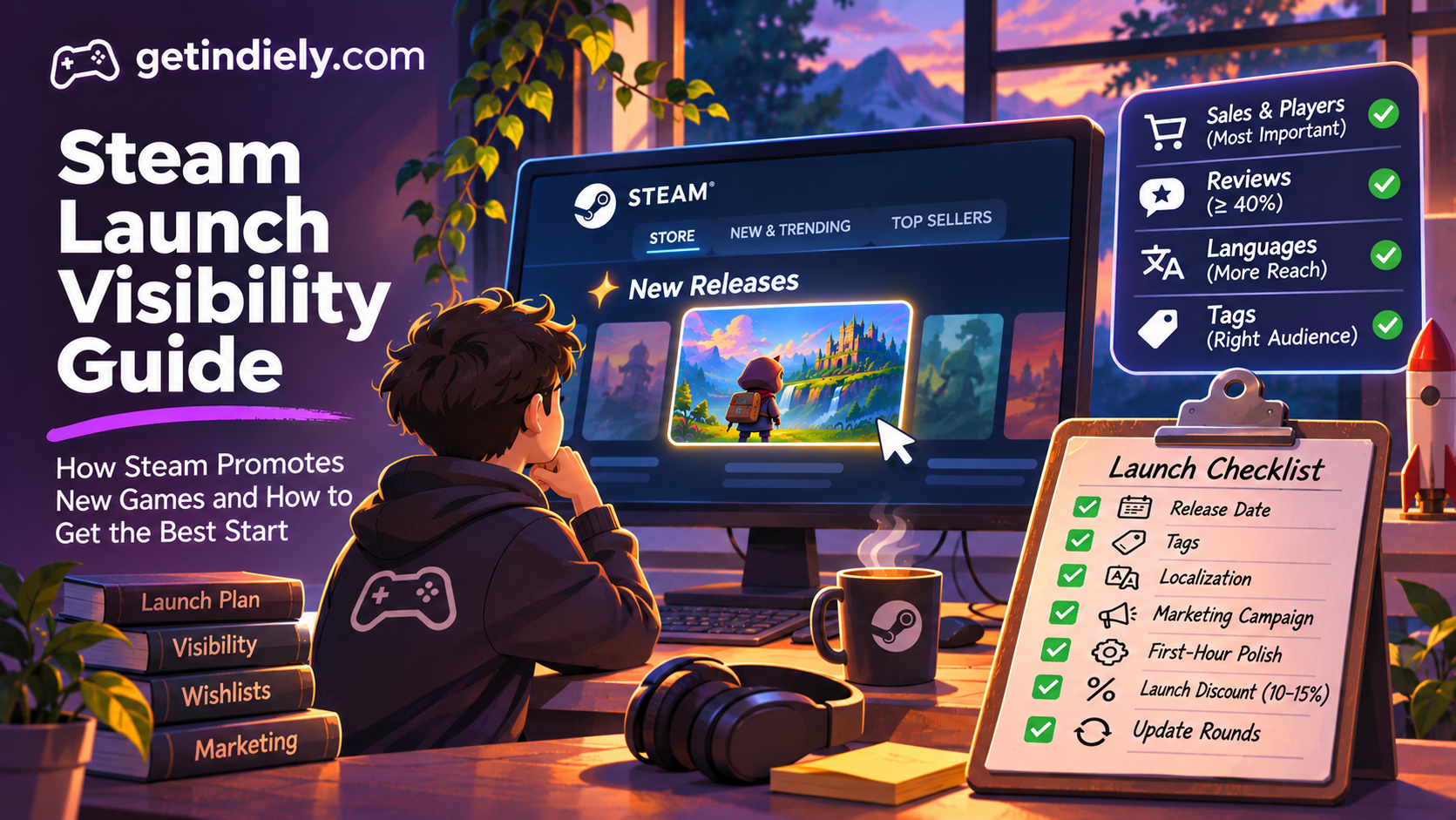
Many developers expect Steam to give a new release a burst of free promotion, and then wonder why it seemed to disappear after a few days. Understanding what Steam actually does for a new game, and what it doesn't, helps you plan a launch that doesn't depend on luck.
This guide explains how launch visibility works according to Valve's documentation, which factors matter, which don't, and how to give your game the best chance in its first weeks.
What Steam does when your game launches
Valve's visibility documentation lists what happens at release:
- New Releases: "your title will start appearing on the New Releases page for users," including the All New Releases list linked from the Steam home page.
- A pool of new titles: "As soon as your product releases, it is added to a pool of titles that have also just released." Valve says this pool prioritizes "the titles that have the least amount of views since release," so every new game gets some baseline exposure.
- Wishlist emails: players who wishlisted your game are emailed when it releases.
- New and Trending: the game "may appear on the 'New and Trending' section on the home page if the title is doing well." Valve warns it "may be bumped off this list quickly if many other popular products are releasing at the same time."
- Top Sellers: it can appear on top seller lists on the home page and on genre and tag pages "if it has achieved sales rank."
What helps visibility, and what doesn't
| Helps, according to Valve | Not a factor, according to Valve |
|---|---|
| Players buying and playing the game | Store page traffic on its own |
| Supported languages | Conversion rate of visitors |
| Accurate tags | Wishlists (with a few exceptions, like the Popular Upcoming tab) |
| Keeping reviews at Mixed (40%) or above | Review score above 40% |
The pattern is clear: Steam shows more people a game that other people are buying and playing. Your launch plan should focus on getting real players into the game in the first days, not on gaming a metric.
Why wishlists still matter at launch
Wishlists aren't an algorithm score, but they're your launch-day audience. Every wishlister gets the release email, and the purchases that follow are exactly what Steam's visibility responds to. That's the link between a strong pre-launch campaign and a strong launch. See how many wishlists you need before launch and our guide to getting more Steam wishlists.
How to prepare for launch visibility
Steam's attention is short and competitive, so the work happens before release day. Our recommendations:
- Pick your date carefully. Valve warns that big releases can push smaller games off New and Trending. Check upcoming releases in your genre, and avoid weekends, which Valve recommends against.
- Get your tags right. Tags decide which genre and tag pages your game can appear on. See our Steam tags guide.
- Localize if you can. Valve lists supported languages as a visibility factor. Our localization guide explains how to choose languages.
- Concentrate your marketing on launch week. Creator coverage, press, social posts and your own community all push the early purchases Steam responds to.
- Polish the first hour. Early negative reviews can push your score below 40%, which Valve says makes featuring less likely.
- Use a modest launch discount. Valve suggests 10–15%. See the Steam release checklist for the rules.
After the launch window
Launch visibility is one moment, not the only one. Valve gives every product Update Visibility Rounds for major updates once launch visibility has ended, and there's "no limit to how much time must be between the use of your Update Rounds." Discounts, seasonal sales and themed festivals bring new chances to appear in front of players. Our guides to Steam events and announcements and Steam discounts cover these.
Early Access games get a version of this twice. Valve says leaving Early Access "is treated the same as a title releasing fully for the first time," which makes 1.0 a second launch. See our Early Access guide.
Launch visibility checklist
- Release date checked against big releases in your genre; not a weekend.
- Tags accurate and specific.
- Supported languages finalized.
- Press, creators and community lined up for launch week.
- First hour polished and tested by strangers.
- Launch discount set before release.
- Update Visibility Rounds planned for your first major update.
Steam launch visibility FAQ
Does Steam promote new releases?
Yes. New releases appear on the New Releases lists and in a pool of recently released titles that prioritizes games with the fewest views. Further placements, like New and Trending or Top Sellers, depend on how well the game sells.
Do wishlists affect Steam's algorithm at launch?
Valve says wishlists aren't a factor in algorithmic visibility, with exceptions like the Popular Upcoming tab. Their value at launch is the release email that brings early buyers.
Can I pay Steam for more visibility?
No. Valve's documentation answers that question directly with "Nope."
Does leaving Early Access give my game new visibility?
Yes. Valve says leaving Early Access is treated the same as a full release for the first time.
Sources
More from the Journal
How to Write a Steam Short Description That Makes Players Scroll
Valve rules, a simple formula and before-and-after examples for writing a Steam short description that tells players what they will actually do.
Read the article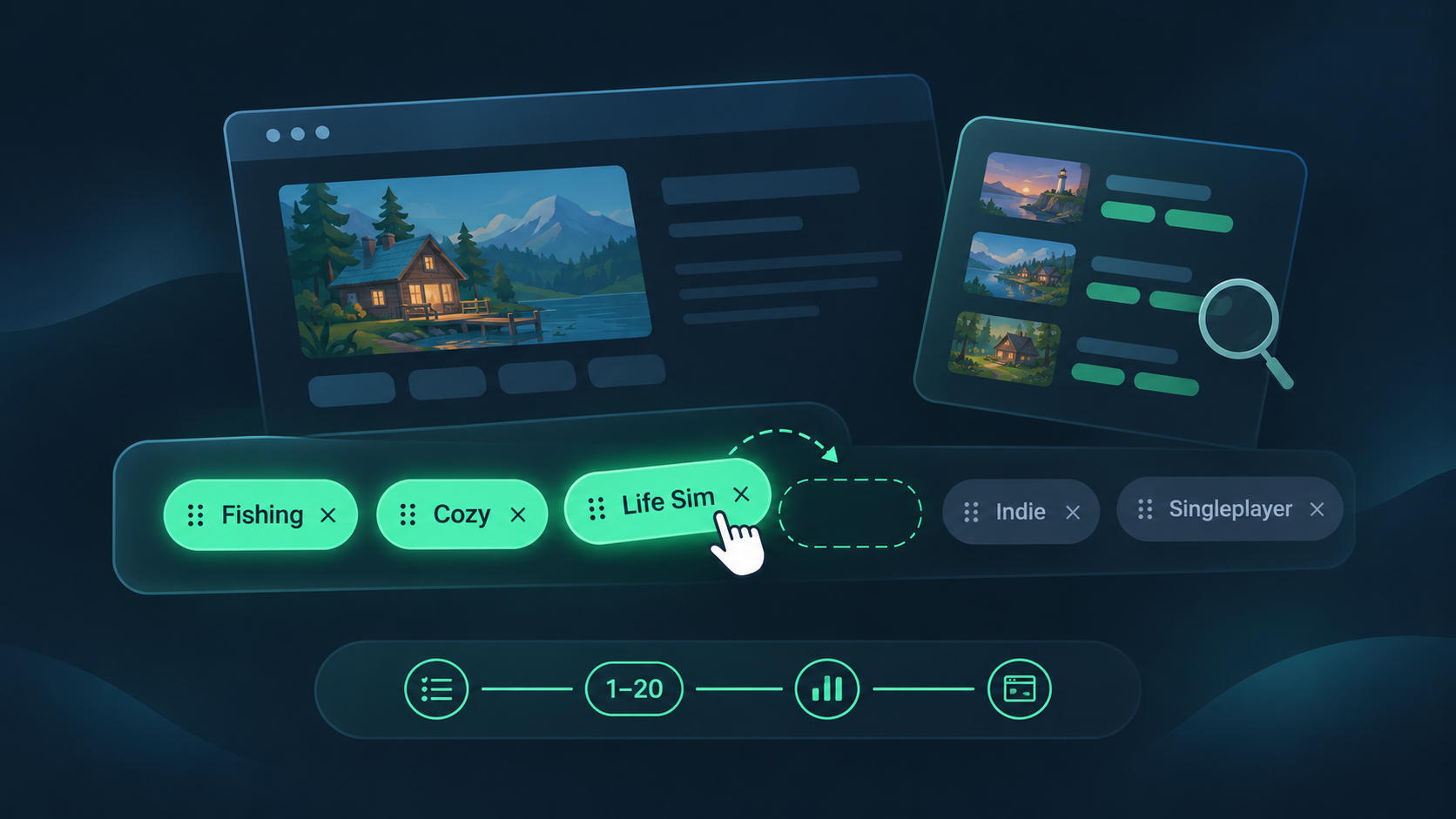
How to Choose Steam Tags for Your Indie Game (and Order Them Right)
How Steam tags work, how to choose and order your top 20, and how to check them against similar games. Based on Valve docs, with a worked example.
Read the article
How to Read Your Steamworks Traffic Report (Without Panicking)
A plain-English guide to the Steamworks traffic report: what impressions, visits and CTR really measure, and how to turn them into weekly decisions.
Read the article